



Global Pensions | 19 Nov 2009 | 12:12
UK - The Bank of England would like to see more uptake of index linked gilts by institutional investors, but appetite for the paper does not seem to be there.
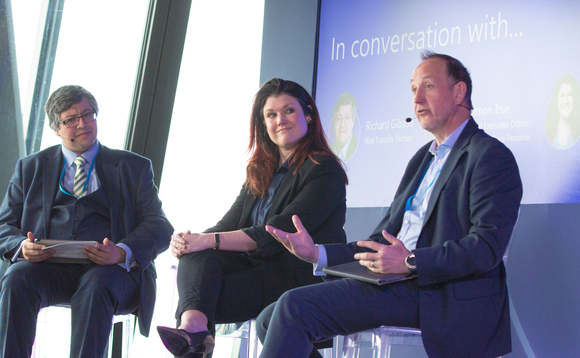
Bank of England executive director of markets Paul Fisher and a member of the Bank's Monetary Policy Committee, told delegates at the Professional Pensions Show 2009: "We quite like the idea of index linked gilts and we would like to see more out there. The problem is that when the auctions come up, we don't get much participation. The bonds are seen as too expensive."
Advertisement
He was responding to a question about prospective issuance of undated index-linked gilts. He acknowledged that "something in the micro structure isn't working".
"I would encourage people to turn up and bid at these auctions," said Fisher, who joined the Bank of England MPC in February this year.
Explaining how the Bank had used monetary policy and liquidity measures through the financial crisis of the last two years, Fisher said the policies would be unwound "with a transition to normal". The Special Liquidity Scheme is scheduled to end in January 2012, and the programme to provide US dollar liquidity, which was undertaken in tandem with the Euro monetary authorities and the US Federal Reserve, is due to end on February 1, 2010. "In fact, it is hardly being used now," explained Fisher.
Two other measures - extended collateral repo operations and the discounted window facility - will continue to run. Fisher said the measures worked by "behavioural offset", and it was intended that it would remain more attractive to finance in private repo markets than through the Bank of England.
Delegates were also concerned that the Bank of England's asset purchase programme in recent months was fuelling a bubble in the UK stockmarket. "We don't think the word ‘bubble' is appropriate," said Fisher. "We are not the only ones expanding our balance sheet - the Euro system and the Fed are doing the same. There has been an international rise in asset prices.
"We don't see the sort of behaviours that go with asset price bubbles yet - things like loan to value ratios of over 100% in the property markets. We intended to increase asset prices, but we are also reducing spreads."
He said that the discount window facility, opened in October 2008, had been particularly useful, and that the type of collateral accepted for the swaps would be widened "in due course".
He noted the asset buying activity had "crushed" LIBOR spreads, which would benefit businesses. "Over half of loans to small and medium businesses are fixed spreads to LIBOR so they would be helped." Although the Bank of England had bought gilts heavily, providing the liquidity for other markets, Fisher said the Bank was ready to "do the unwinding when necessary. But we have the right policy for now."
Global Pensions | 07 Dec 2009
Global Pensions | 02 Dec 2009
Global Pensions | 27 Nov 2009
Global Pensions | 01 Oct 2009
Global Pensions | 16 Apr 2009
Global Pensions | 02 Apr 2009
Register now to receive your free monthly copy of Global Pensions, the magazine that provides exclusive news and in-depth features to the worlds largest pension schemes
Visit our specialist Exchange-traded fund title, for all the latest news, stats and opinion from the ETF universe.
RECENT COMMENTS