Global Pensions | 30 Oct 2009 | 11:11
Helen Morrissey speaks to Jim Leech, chief executive officer of the Ontario Teachers’ Pension Plan about changes in asset allocation and how the fund is preparing for the future
Advertisement
Helen Morrissey: How has the Ontario Teachers’ Pension Plan (OTPP) weathered the current financial crisis?
Jim Leech: We are making progress and we are very satisfied with what we have done so far. We don’t publish any figures until year end but we are enjoying healthier markets than last year. Part of this is because we mark to market annually so last year we did mark some of our high quality assets down. However, we always had confidence in the strength of those assets and knew that when things started to get better we would get results. It’s certainly not the case that we have sold large chunks of our fund portfolio and reinvested elsewhere.
One change we did make, though, was to reduce our allocation to equities by 5%. This move wasn’t so much in response to the markets as it was to the changing demographics of our plan members. At the moment we have 1.6 active teachers to every one retiree so the plan is mature and we can’t afford to take as much risk. We have been slowly reducing our equity allocation over the past six or seven years and the allocation currently stands at 40% of the fund. A few years ago it would have been more like 65%.
As we’ve moved away from equities we have looked to increase our allocation to inflation sensitive assets such as commodities, infrastructure, real estate and real return bonds. Our allocation to these kinds of assets currently stands at about 45% of the plan. We have also been benefited by our exposure to emerging markets as we’ve had an overweight to Brazil and we’ve formed some great partnerships with entrepreneurs out there. Brazil has a lot of factors working in its favour right now in terms of its political stability and currency and our investment has served us well.
Helen Morrissey: Investment in real estate and infrastructure seems like a common theme for many Canadian pension plans. Why is this?
Jim Leech: With regards to real estate, we actually own one of the largest real estate companies – the Cadillac Fairview Corporation. The company invests probably 90% within Canada with the balance being spread out between Brazil, the US and the UK. The company’s real estate portfolio currently stands at around C$16.2bn (US$15.4bn) so it is very sizeable. The OTPP was also one of the first plans to directly invest in infrastructure and we remain one of the leading investors in this market. We are particularly interested in investing in water utilities, ports, airports and toll roads.
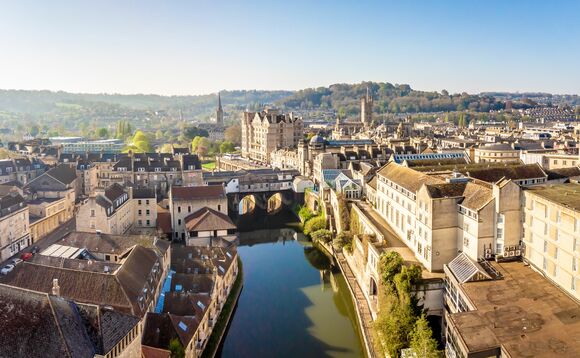
We recently announced our acquisition of an extra 35.5% in the UK’s Bristol International Airport for instance. For a while there, though, the world did seem to come to a standstill and there weren’t many transactions in private capital or infrastructure. However, over the past couple of months we have seen more transactions coming through as people become more realistic in terms of price and credit is starting to loosen up. While this was going on, we tended to focus on improving the operations of those companies we had already invested in and I don’t think it was a bad pause to take.
Helen Morrissey: What do you see as the key challenges currently facing the Canadian pension system?
Jim Leech: I don’t see the challenges as being within the plan – it’s more a coverage issue. There is still a significant proportion of people who aren’t a member of a workplace pension plan. They may be members of the Canada Pension Plan but beyond that they don’t have anything and as a result they aren’t saving enough to give them a decent lifestyle in retirement. It is an issue that really needs to be addressed. It is certainly on the radar and I believe it will certainly become a big political issue as time goes on. Other provinces are considering things and Ontario did produce a survey on the issue. It’s a challenge that is going to be difficult to resolve but we certainly should try and do something.
The provincial governments of Alberta and British Columbia have come up with a plan (the ABC plan) which aims to increase coverage by enabling the self employed or those working for small companies to pay into a straight defined contribution plan. It’s still in its early stages but I would like to see them going further down the road towards providing some kind of guarantees. I think we will see more bright minds being turned to these issues over the coming year or so and hopefully we can move towards possibly providing large multi employer plans that small companies can enter which provides elements of both defined benefit and defined contribution provision.
I think another key challenge that has been highlighted in these difficult times is the level of experience within the industry. So many people in this industry are young and they’ve never experienced a real downturn and you wonder how those professionals are holding up during these particularly difficult times.
Of course all situations are different but at least if you have some experience of difficult times then you have an idea of how to move forward. I think this is evident when you look at the plans that have been looked after veterans during this crisis. They may have suffered some body blows but they haven’t needed to do any major surgery on their plan.
Helen Morrissey: What do you think are the key lessons people have learned from the economic crisis?
Jim Leech: We were fortunate that the Canadian banking system prevented the country from going into the crisis situation that others did. We haven’t had to bail out any banks for instance, but it’s also fair to say that we don’t always learn our lessons from these situations. If you look at all the crises we’ve been through then there is no new paradigm. If you overheat demand then eventually you will have some sort of crisis. Most crises are premised on the fact that people were borrowing short to lend long and this situation is no different. However, I do hope that we won’t make the same mistake again.
Helen Morrissey: You mentioned the approach the plan is taking to managing the changing demographics of the plan. What else are you doing?
Jim Leech: One thing that didn’t pick up a lot of media attention was that our sponsors put together a sustainability group to address the ongoing issue of changing demographics and how we can ensure the plan continues to meet its commitments over the long-term. I think this demonstrates a responsible approach to tackling this issue as we strive to keep ahead of what’s going on. I think we are following a good predetermined path and it’s a responsible way of ensuring the plan remains on a solid footing.
Over the past four or five years the group has put together surveys on issues such as contribution levels, priorities etc. They have researched all manner of different issues and have engaged with pension experts on a worldwide stage. As a result I think the OTPP has the best informed sponsors that a plan could have and it’s great that they understand what the issues are and develop ways of getting to grips with them.
Helen Morrissey: How do you see occupational pension provision evolving in Canada over the next few years?
Jim Leech: My concern is that like in many countries we have seen an increased move towards the adoption of defined contribution plans. As a result people tend to view the issue in black and white terms – it’s either defined benefit or else defined contribution – there’s no middle ground. For instance people think defined benefit is less expensive but then the risk is moved to the employer. However, when you look at defined contribution then all the risk is put on the employee and they tend to be the least capable people of making these long-term investment decisions.
I think it shouldn’t be a black and white decision – there needs to be shades of grey in the middle.
Don’t just look at the DB/DC question when you can look at adopting a hybrid solution instead. For instance our plan sponsors introduced the concept of only guaranteeing 50% of any inflation linked increase from the end of the year. The rest of the uplift will be very much dependant on the performance of the plan and whether we can afford to pay the extra or not. I hope people will look at how we have looked to deal with these issues and agree we’ve adopted a sensible approach.
Helen Morrissey: So 2009 has been a difficult year – how would you characterise it?
Jim Leech: As far as I’m concerned 2009 has been characterised as a year where we have played in defence. It hasn’t been a year to break out and take risks. I’d liken our approach to that of a famous Canadian ice hockey player called Bobby Orr. He was famous for playing defence but if he saw an opportunity to score then he would go for it. I think we will look to continue with the same approach.
Global Pensions | 30 Oct 2009
Global Pensions | 01 Oct 2009
Global Pensions | 04 Aug 2009
Register now to receive your free monthly copy of Global Pensions, the magazine that provides exclusive news and in-depth features to the worlds largest pension schemes
Visit our specialist Exchange-traded fund title, for all the latest news, stats and opinion from the ETF universe.
RECENT COMMENTS